

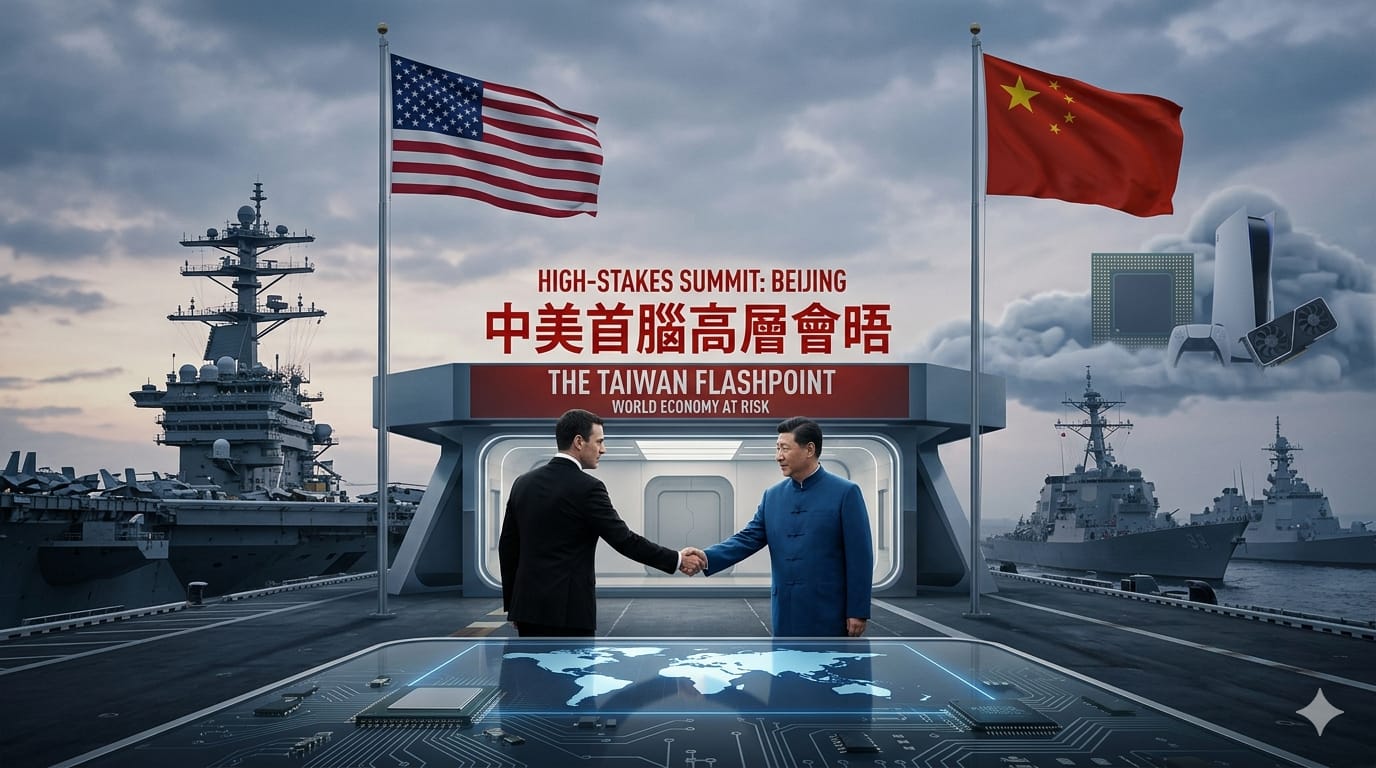
Let’s be honest: international relations like in Trump-Xi Summit usually sound like a massive snooze fest. But when the leaders of the world’s two biggest superpowers sit down for a face-to-face chat, it isn’t just politics it’s peak drama. US President Donald Trump just wrapped up a massive three-day state visit to Beijing to meet Chinese President Xi Jinping.
On the surface, it looked like a high-budget movie. There were red carpets, military marching bands, and a grand welcome at the Great Hall of the People. But beneath all the handshakes and fancy dinners, the tension was absolutely real. You need to look closer to see where US China relations are actually heading after those intense, closed-door meetings.

The Breakdown: What Went Down?
The main goal of this high-profile Trump-Xi Summit was to keep the global economy from spiraling into total chaos. Last year, the two nations were locked in a brutal trade war, slapping massive taxes on each other’s goods. Right now, they’ve agreed to a temporary, uneasy truce.
Trump even brought a massive squad of American tech and finance CEOs along including the bosses of Apple and Nvidia to talk big business.
But while Trump was busy pushing to open up Chinese markets for US companies, Xi Jinping brought the real thunder. He didn’t hold back on the most sensitive topic on the planet: Taiwan. Xi explicitly warned Trump that if the US mishandles the Taiwan issue, the two superpowers could face “confrontation or even conflict.” This sudden, direct warning sent shockwaves through the diplomatic community tracking US China relations.
THE ULTIMATUM
“The Taiwan question is the most important issue… If mishandled, the two countries could face confrontation or even conflict.” — Xi Jinping
The Elephant in the Room: Taiwan & Spies
Why is Taiwan such a massive deal? China claims sovereignty over Taiwan, a self-governing island democracy, and has threatened to take it by force if necessary. On the flip side, the US has historically backed Taiwan and sells them billions of dollars in military weapons to defend themselves. Beijing hates this and wants the US to completely back off.
Taiwan to avoid drama, Trump didn’t hide the overall vibe of deep suspicion. He openly admitted on the sidelines that both nations “spy like hell” on each other. It’s a classic frenemies situation: they are signing major trade deals while keeping their eyes locked on each other’s next military move, permanently altering the landscape of US China relations.
The Real Impact: How This Affects YOU
You might be wondering, “Why should I care about a meeting happening thousands of miles away in Beijing?”
It’s simple: world peace and your daily digital life literally depend on these two getting along.
If a conflict actually triggers over Taiwan, the global economy hits a brick wall. The advanced microchips that power your smartphones, your next-gen gaming consoles, graphics cards, and even electric vehicles are heavily tied to Taiwanese tech manufacturing. A superpower showdown means massive shortages and skyrocketing prices. This economic vulnerability highlights why the stability of US China relations matters directly to your pocket.
HOW A TIMELINE AFFECTS YOUR POCKET
[US-China Tension] -> [Supply Chain Disruption] -> [Chip Shortage] -> [Your Next Phone Costs 2x]
What Happens Next?
Despite the heavy warnings from Xi, the summit ended on a surprisingly pragmatic, business-first note. Trump praised Xi as a “great leader” and invited him to visit the White House later this September. They also found some common ground on global security, agreeing on the critical need to keep the Strait of Hormuz open to ensure the free flow of energy amid ongoing Middle East tensions
Essentially, they’ve agreed to minimize direct competition and manage their differences so the global system doesn’t collapse. For now, the trade truce holds, the tech trade continues, and a global crisis has been paused. However, structural disagreements over national security will continue to test the boundaries of US China relations.
Being aware of how these massive geopolitical gears turn gives you an edge in understanding the future. Our goal is to always cut through the media noise and give you a straightforward look at how changing US China relations will shape the world we live in.