

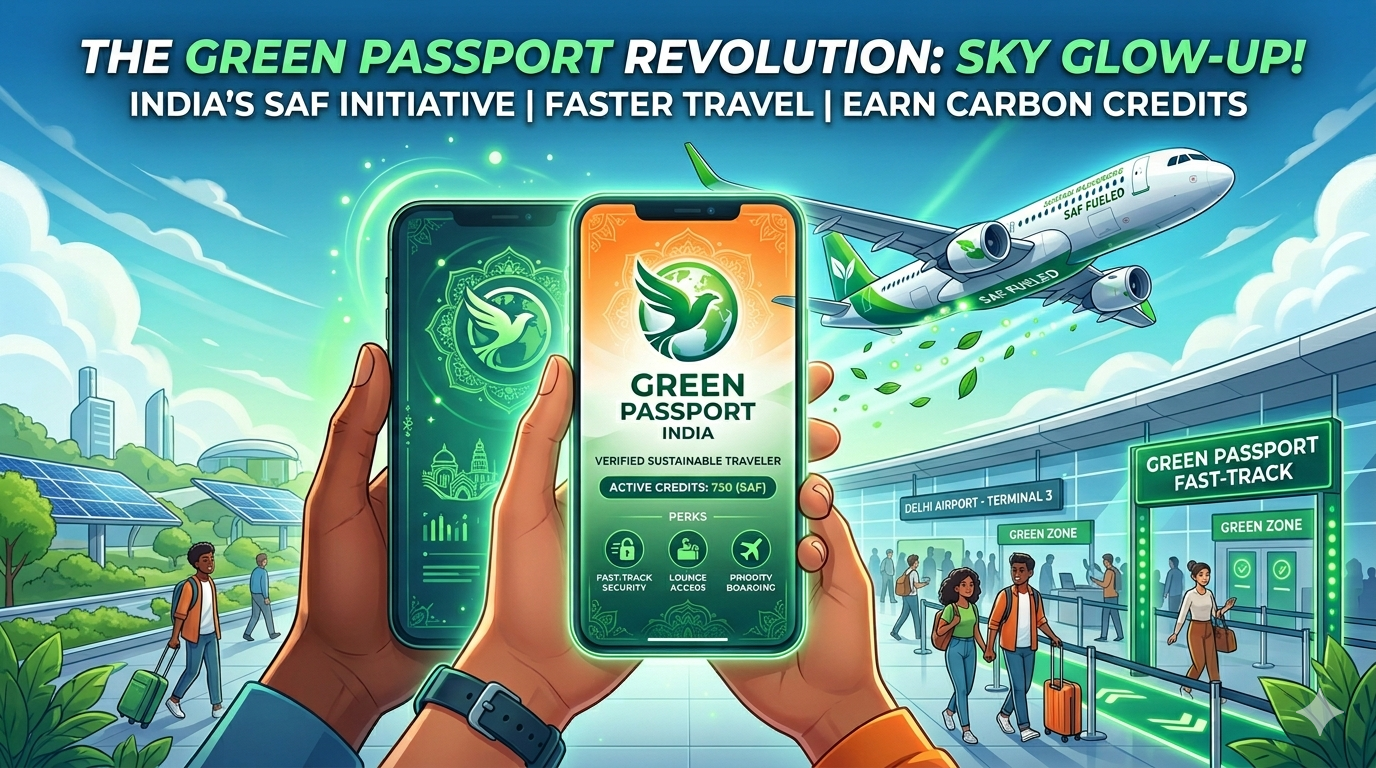
The green passport is the ultimate digital upgrade for the modern traveler, transforming your eco-conscious flight choices into a high-status “verified badge” on your phone. Its significance lies in shifting sustainability from a boring chore to a rewarding lifestyle, giving you real-world perks like faster security and lounge access while you help India reach its net-zero goals. For our generation, the green passport is proof that being a global citizen isn’t just about where you go, but the positive impact you leave behind in the skies.
Why and How it Started ?
It started with a problem: aviation is one of the hardest sectors to “clean up.” While we have electric cars and solar homes, making a massive airplane fly across oceans without fossil fuels is tough. In April 2026, the Indian government amended the Aviation Turbine Fuel (ATF) Regulations to allow blending with Sustainable Aviation Fuel (SAF).
This gave birth to the green passport concept, a digital way to track and reward travelers who choose “green” flights. The goal? To hit India’s target of 1% SAF blending by 2027 and move toward a net-zero future without grounded planes.
What is the Green Passport?
The green passport is essentially a digital sustainability profile for frequent flyers. It’s a loyalty program for the planet. Instead of just earning miles to get a free flight later, you earn “carbon credits” or “green points.”
When you book a ticket on a flight using SAF (fuel made from things like used cooking oil or agricultural waste), your green passport gets an update. It’s a verifiable record often backed by blockchain that proves you are a conscious traveler. Think of it as a “verified badge” for your travel habits.
Why It’s Important
Right now, being eco-friendly often feels like a sacrifice. The green passport flips the script by offering “main character” perks. We’re talking:
Fast-Track Security: Skipping the soul-crushing lines because you’re a high-tier green traveler.
Lounge Access: Getting into premium spaces based on your carbon offset history.
Priority Boarding: Getting on the plane first because your green passport shows you’re helping save the sky.
UPSC Nuggets (The Exam Edge)
Statutory Basis: Enabled via amendments to the Aviation Turbine Fuel (Regulation of Marketing) Order, 2001 under the Essential Commodities Act, 1955.
CORSIA Mandate: India is aligning with the Carbon Offsetting and Reduction Scheme for International Aviation (ICAO led). Mandatory for India from 2027.
Blending Targets: 1% by 2027, 2% by 2028, and 5% by 2030 for international flights.
The Tech: This falls under “Hard-to-Abate” sectors. SAF is a “drop-in” fuel, meaning no engine changes are needed.
Why This Matters to YOU
might soon be as important as your actual passport. Universities and global employers are looking for “Global Citizens.”
Having a high-tier green passport shows you aren’t just taking up space; you’re taking responsibility. Plus, in a world of 3-hour airport waits, that “fast-pass” through security is a total game-changer for your mental health and your schedule. The green passport is proof that being aware is powerful and it comes with perks.
Stay informed. Stay sharp with dailyupscprep.in
India’s Green Aviation Strategy Explained This video provides an expert breakdown of the recent government policy changes regarding ethanol blending in jet fuel and India’s roadmap for sustainable aviation