

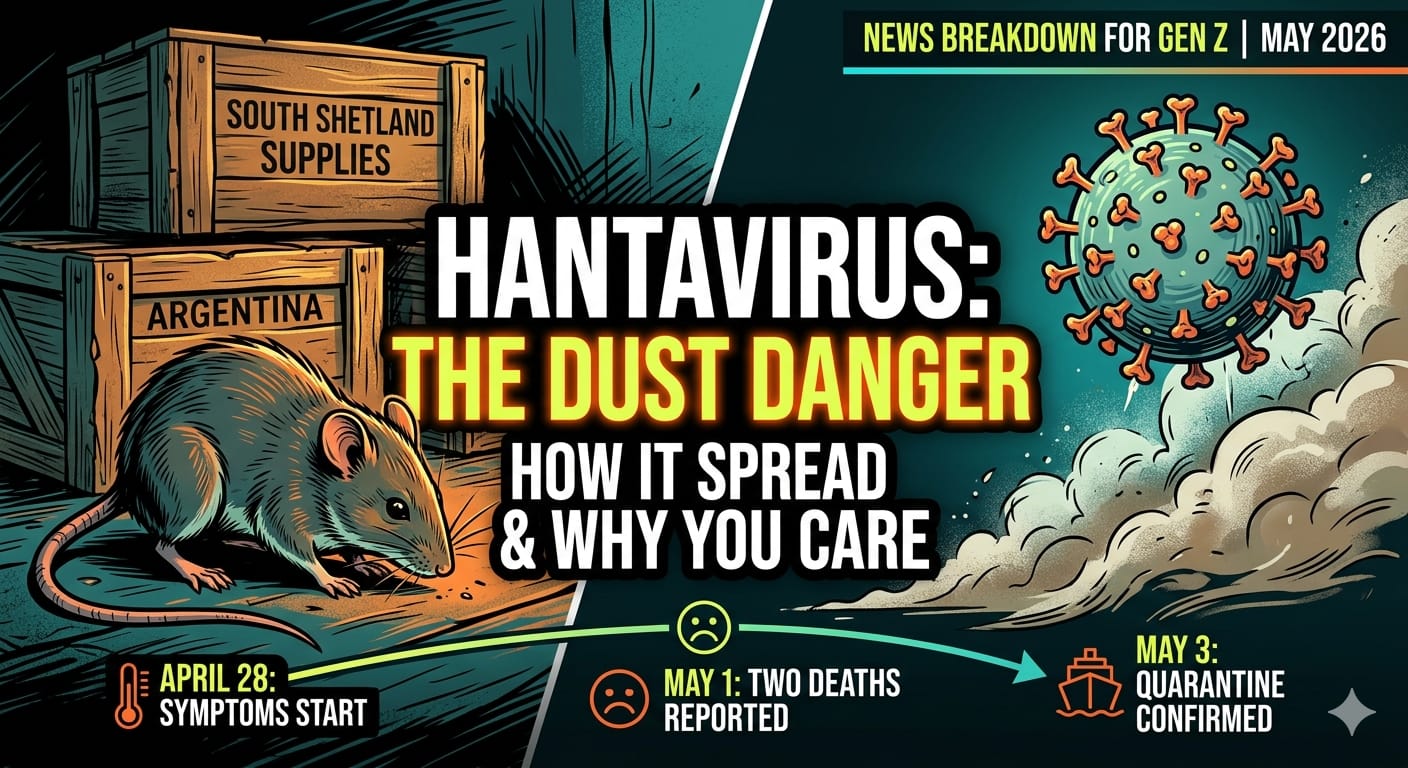
While everyone is busy with their deeds and the fancy lifestyles everyone has been enjoying, a serious life threat has been developing in the Atlantic. It’s the hantavirus outbreak on the cruise of MV Hondius, which has left three people dead and several others in critical conditions.
The story of hantavirus starts in the ship’s voyage from the South Shetland Islands toward Argentina.
11 April: Dutch passenger on board cruise ship died
24 April: Deceased passenger and wife disembarked on the St. Helena.
27 April: Cruise operator informed wife died during return journey
27 April: A British national became ill and was evacuated to South Africa.
2 May: A German passenger died aboard the cruise ship.
What exactly is Hantavirus?
Hantaviruses are a family of viruses spread mainly by rodents (think mice and rats). Unlike COVID-19, which is primarily respiratory between humans, Hantavirus is “zoonotic” meaning it jumps from animals to humans in the most hazardous way.
In the Americans , it usually causes Hantavirus Pulmonary Syndrome (HPS), a severe lung disease. In Europe and Asia, it more commonly leads to Hemorrhagic Fever with Renal Syndrome (HFRS), which affects the kidneys.
How does it spread? (The “Invisible Dust”)
This is the part that surprises people. You don’t have to be bitten by a rat to get sick.
Aerosolization: This is the most common way for hantavirus to get spread over. When rodent urine or droppings are stirred up (like when sweeping an old shed or cleaning a dusty room), the virus gets into the air. You breathe in that “infected dust,” and the virus enters your system.
Direct Contact: Touching contaminated nesting materials and then touching your eyes, nose, or mouth.
Human-to-Human? It is extremely rare. While one specific strain in South America (the Andes virus) has shown some person-to-person spread, most Hantaviruses do not pass from one human to another. This is why health officials aren’t calling for a global lockdown.
- The Symptoms: More than just a cold
The tricky part is that it starts off looking like a regular flu. At first it doesn’t feel that big .
Early Stage: Fever, severe muscle aches (especially in the thighs and back), fatigue, and dizziness.
The “Crash”: About 4 to 10 days later, the real danger hits. The lungs start filling with fluid, making it very hard to breathe. This is when it becomes a medical emergency. - Can it be treated?
There is no specific cure or vaccine for Hantavirus yet. However, if it’s caught early, patients can recover with intensive hospital care. This usually involves:
Oxygen therapy or mechanical ventilation to help the lungs.
IV fluids to keep the body hydrated and blood pressure stable.
The Real Impact: Why this matters to YOU
You might not be on a cruise ship in the Atlantic, but Hantavirus is a global reality.
Travel Safety: If you’re heading to rural areas or staying in cabins/camping sites, be mindful of rodent activity.
Cleaning Hazards: If you’re cleaning out a dusty storeroom or a garage that hasn’t been opened in months, don’t sweep or vacuum first. That kicks the dust into the air. Instead, use a disinfectant or bleach solution to wet the area down before cleaning it up with a damp cloth.
No Need for Panic: Because it doesn’t spread easily between people, the risk to the general public remains very low.
Bottom Line: Hantavirus is a reminder that nature has its own set of rules. We don’t need to live in fear, but we do need to be smart about our environment. To know more in details you can also visit WHO’s official article.
Keep your space clean, stay away from “dusty” rodent zones, and stay sharp.
For such daily current affair insights you must stay updates on dailyupscprep’s page